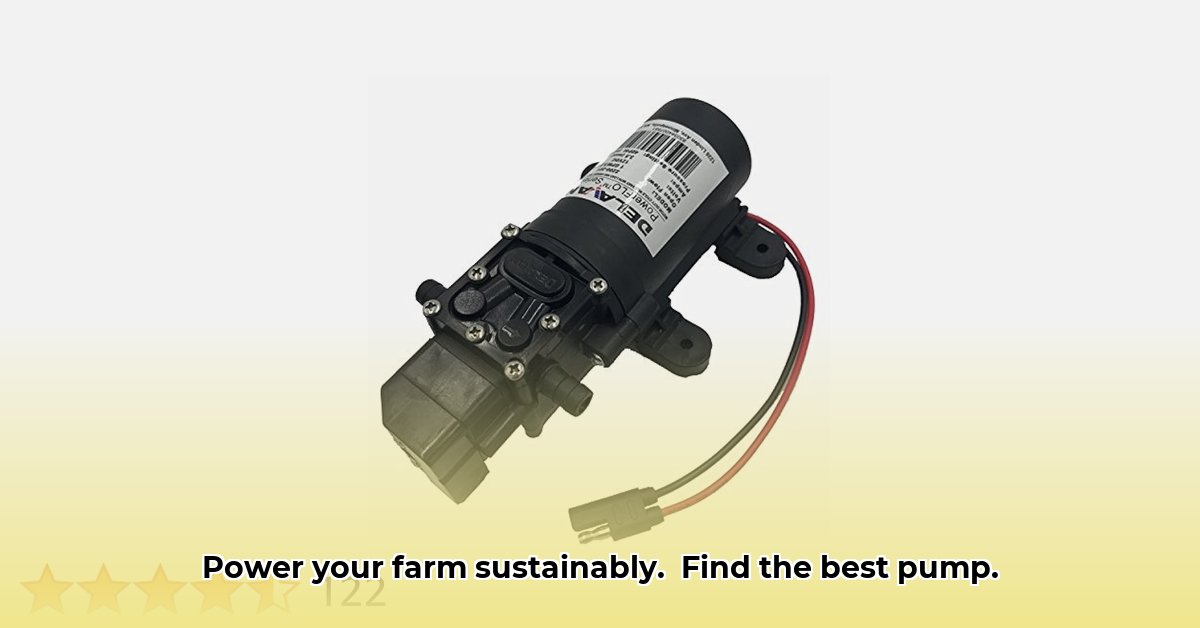
Choosing the right 12-volt water pump can revolutionize your farming operation, boosting efficiency and reducing your environmental impact. This comprehensive guide will equip you with the knowledge to select, install, maintain, and utilize a 12-volt water pump effectively, promoting sustainable agricultural practices. We'll cover key specifications, installation procedures, maintenance tips, and sustainability considerations, ensuring you make an informed decision for your farm's unique needs. For more information on 12-volt pumps, check out this helpful resource.
Picking the Perfect Pump: Understanding Key Specifications
Before browsing Tractor Supply's offerings (or those of competitors), understanding key specifications is paramount. These specifications will directly influence your pump's performance, efficiency, and lifespan. Let's break them down:
Flow Rate (GPM): Gallons Per Minute – This indicates the volume of water your pump delivers per minute. A higher GPM is needed for larger irrigation systems or livestock watering troughs. For example, a higher GPM might be necessary for quickly irrigating a large field.
Head Pressure (Feet): This represents the pump's ability to lift water vertically. If your water source is underground or you need to pump water uphill, a higher head pressure is essential. A higher head pressure means the pump can lift water to greater heights.
Power Consumption (Watts/Amps): This describes the pump's energy usage. Lower power consumption translates to lower running costs and a reduced carbon footprint. Consider the energy efficiency rating when comparing models.
Lifespan (Years): A longer lifespan reduces waste and long-term costs. Consider pumps made from durable materials like stainless steel for extended performance. A longer lifespan also means less frequent replacements.
Water Source Compatibility: Check compatibility with your water source (well water, rainwater harvesting, etc.). Some pumps are better suited for specific water qualities. Consult the manufacturer's specifications to avoid costly mistakes.
The following table provides an illustrative comparison, but always consult manufacturer specifications for the most accurate data:
| Pump Model | Flow Rate (GPM) | Head Pressure (ft) | Power Consumption (Watts) | Estimated Lifespan (Years) | Tractor Supply? | Notes |
|---|---|---|---|---|---|---|
| Tractor Supply Model X | 5 | 30 | 150 | 3-5 | Yes | Suitable for smaller applications. |
| Tractor Supply Model Y | 10 | 50 | 250 | 4-6 | Yes | Better for larger gardens or livestock. |
| Competitor Brand Z Model A | 7 | 40 | 180 | 5-7 | No | Potentially longer lifespan, consider the cost |
Installation and Setup: A Step-by-Step Guide
Safety First! Always disconnect the power supply before starting any installation.
Strategic Placement: Select a location that's accessible for maintenance and protected from weather. Ensure adequate ventilation to prevent overheating.
Plumbing Connections: Securely connect the pump to your water source and irrigation system using appropriate leak-proof fittings.
Electrical Hookup: Connect to your 12-volt source (battery, solar system, etc.). If using solar, ensure sufficient power capacity. Consult an electrician if you're unsure. Improper electrical connections can be dangerous.
Priming the Pump: This crucial step involves filling the pump with water to remove air pockets. Follow manufacturer instructions for optimal results. Failure to prime correctly can lead to pump failure.
Testing and Inspection: After powering on, inspect all connections for leaks and listen for unusual noises. Address any issues immediately.
Maintenance and Troubleshooting: Ensuring Longevity
Regular maintenance extends pump lifespan and prevents costly repairs.
- Regular Cleaning: Remove debris to maintain optimal performance.
- Lubrication: Lubricate moving parts according to manufacturer instructions.
- Leak Detection: Regularly check for leaks and repair as needed.
- Troubleshooting: If problems arise, consult the manufacturer's troubleshooting guide. If necessary, call a professional.
Sustainability Considerations: Environmentally Responsible Farming
Selecting energy-efficient models minimizes your environmental impact. Consider:
- Energy Consumption: Opt for pumps with low power consumption.
- Lifespan: A longer lifespan reduces waste.
- Responsible Disposal: Recycle components whenever possible at the end of the pump’s lifecycle.
Choosing a 12-volt pump is already a step toward sustainability. Pair it with solar power for truly eco-friendly irrigation.
Conclusion: Empowering Sustainable Farming Practices
Selecting the right 12-volt water pump is crucial for efficient and sustainable farming. By understanding key specifications, following proper installation and maintenance procedures, and considering the environmental impact, you can optimize your water management and contribute to a greener agricultural future. Remember to always consult the manufacturer's instructions for your specific pump model.